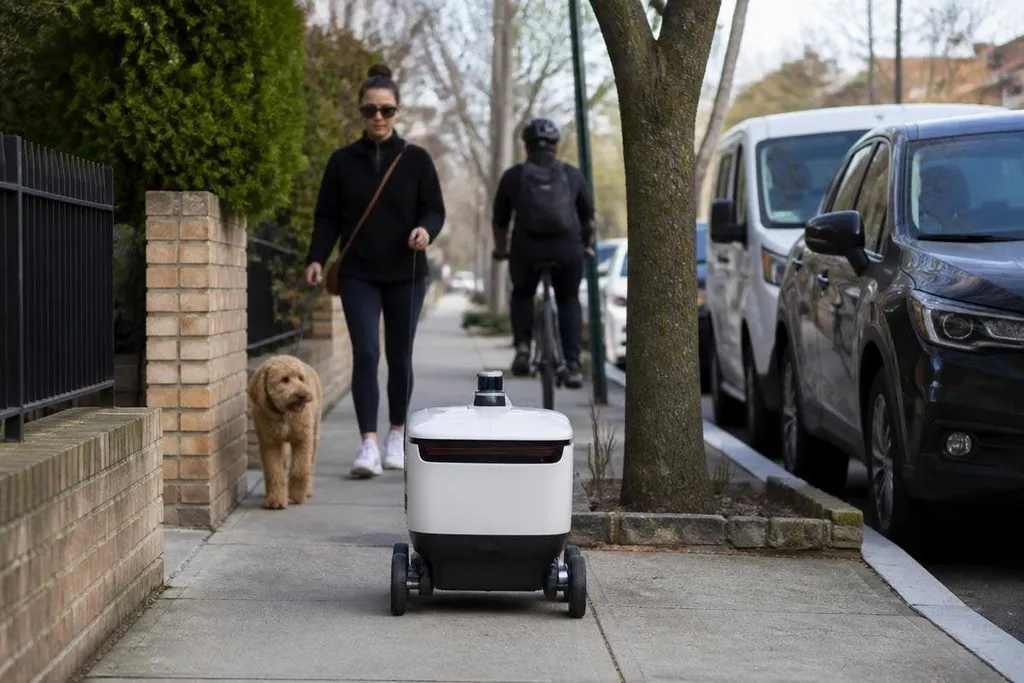
A sidewalk robot has to share a narrow public space with people, bikes, pets, kerbs, driveways, and parked vehicles. The next generation will be judged by how safely it handles those daily problems, not by how neatly it moves in a test video.
For a city operator or delivery company, the useful question is practical: can the robot finish repeat trips without blocking the pavement or needing constant remote help?
- Autonomy needs context: A robot that works on a quiet campus may struggle beside a busy road.
- The remote link matters: Human support can help, but it adds staff and operating cost.
- The trial design decides the result: Routes, weather, pedestrian flow, and failure records all need to be clear.
What the robot has to understand
Sidewalk travel starts with sensing. Cameras can identify people, signs, kerbs, and other objects. LiDAR measures distance by sending out laser pulses, which helps the robot build a view of nearby space. The robot then combines those readings with a map and chooses a path.
That path can change from one second to the next. A person may stop in front of the robot, a delivery van may block the pavement, or a ramp may leave less room than the map shows. The machine needs a safe stop plan when its sensors disagree or the route disappears.
A useful trial logs each blockage and safety stop, rather than showing only clean runs. Sidewalk robot field reports can help you compare what the robot did on a public path with what its maker claims, before the article turns to autonomy.
Autonomy is more than movement
A robot can drive itself and still depend on a remote operator. The operator may watch several machines, answer an alert, or guide one around an obstacle. That setup can help a trial start, but the staffing model changes the cost of every delivery.
The useful measure is not whether a human can fix a problem. It is how often help is needed, how long the response takes, and what kind of problem caused the alert. A robot that asks for help at every blocked driveway has a different business case from one that handles most route changes alone.
Operators also need clear records for stops, near misses, damaged cargo, lost connections, and blocked paths. Those records tell you where the system fails and whether a software change fixed the cause or only moved the problem somewhere else.
The pavement is part of the system
Sidewalk robots don't work in isolation. Their results depend on pavement width, kerb cuts, road crossings, local rules, access to charging, and the people who share the route.
A delivery route can look easy on a map and still create trouble at a school entrance or a shop doorway. The operator needs a route plan that marks narrow sections, crossing points, steep slopes, and places where people often wait.
Weather adds another test. Rain can affect cameras and traction. Snow can cover route markings. Bright sunlight can change what a camera sees. Any serious trial should state which conditions the robot faced and which ones remained untested.
What still needs proof
The next generation may use better maps, more sensors, and stronger software, but those labels don't answer the buying question. You need records from the exact route and task you plan to run.
I'd wait for route-level evidence before paying for a large fleet. A polished demonstration can show that a robot completed one trip; it can't show how often the robot stops across a month of public use.
Use this check before signing a trial agreement:
- Route records: Ask for route maps, crossing points, narrow sections, and access limits.
- Human support: Get the alert rate, response time, operator count, and task types in writing.
- Safety events: Check how the team logs stops, contact, near misses, and blocked paths.
- Weather limits: List the rain, snow, heat, darkness, and surface conditions the robot can handle.
- Cargo control: Confirm the load size, handoff process, failed-delivery process, and theft response.
- Trial exit: Set the results that would make you expand, change the route, or stop.
A sensible trial starts with a small route and a fixed review date. If the robot completes its work with few remote interventions, clear safety records, and no routine blockage of public space, the next question is cost. Until those numbers exist, more autonomy is a claim waiting for pavement evidence.